Hi - We're going to get passionate about the environment; so, grab a beverage, take your shoes off, sit down and get comfy. If global warming is an interest of yours - add your comments, subscribe to the feed and/or become a follower. Don't forget to check out the ads to the right side of the column. There is some very interesting material to be had there. Read, comment, enjoy!!!
The Life Straw is demonstrated to every family. Photo courtesy: Rachel Cernansky via TreeHugger
In May 2009, I wrote about a new invention with the potential to save millions of lives worldwide - the Life Straw. It was a small device about the size and shape of a straw; and, was used like a straw; but, thanks to an amazingly effective filter, people could use it to drink contaminated water safely.
In Kagamega, Kenya, a mostly-rural region known for being one of the last remaining tracts of the Congolese forest belt is not dissimilar to so much of the developing world. However, its lack of access to clean water, which is only available to about 15% of homes in rural areas has caught the attention of the Carbon for Water campaign.
This campaign is run by Vestergaard Frandsen, the company behind the LifeStraw water filter and one the largest makers of mosquito nets in the world. VF is distributing nearly a million LifeStraw Family water filters, which are designed to provide a family of five with clean water for three years — but more notable is the payment plan for the filters.
The name "Carbon for Water" didn't come from nowhere: the filters have been registered with the Gold Standard Foundation's voluntary carbon credit market.
A woman tries her Life Straw Family in her own home. Photo courtesy: Rachel Cernansky via TreeHugger
The Carbon for Water project is the first to use the carbon market to fund an initiative that reduces emissions but also — by design — has public health benefits. For that reason, the resulting carbon credits are known as "charismatic" credits. Women and children stand to benefit the most from use of the filters because they tend to suffer the most in the first place.
Women are responsible for first collecting water and then taking care of household tasks like cooking and making sure children are healthy. But breathing in indoor smoke when cooking or boiling water takes a rapid toll on women's health: Odhiambo said that respiratory disease is probably the fifth most prevalent health issue in the region. And it's certainly not a Kakamega-specific issue: clean cook stoves are gaining momentum around the world, and Hillary Clinton and Julia Roberts recently teamed up to raise awareness about this much-overlooked but really serious, and preventable, problem.
Eliminating the need to boil water — or preventing children from drinking contaminated water if a family does not have the time or resources to boil water for drinking regularly — can have a significant impact on women's daily lives, as well as on the overall public health of the region and potentially on the health of the nearby forest, to which people turn (illegally, but desperately) to gather firewood.
Women await disciplinary action from forestry officials after being caught illegally collecting firewood. Photo courtesy: Rachel Cernansky via TreeHugger
So Vestergaard Frandsen, which has worked in Kenya before and has an established relationship with local health workers and officials, decided to test the new carbon-financed clean water model in Western Kenya. VF's very global staff teamed up with Kenyan health and community mobilization workers to distribute water filters to homes around the province, and with every filter came a 45-minute training session, followed a few days later by a spot-check by another worker, to ensure people understood what they were getting and knew how to use it properly. After a period of about six weeks, VG said it met the target of reaching 93% of homes in Western Kenya.
Overall, VF expects the program to generate a reduction of more than two million tons of carbon emissions annually. The program will be audited by an independent agency every six months, and carbon credits will only be issued after the emission reductions are verified to be accurate.
While not everybody actually boils their water — they maybe should, but can't because they can't afford the firewood or charcoal, or simply don't have time in the day to dedicate to boiling water water; because VF has registered in the voluntary carbon market, it is allowed to receive credits for "suppressed demand." Cases where people have a need, for sanitation and health reasons, to boil water, but don't because they can't.
VF has made a 10-year commitment to Western Kenya, and one of the next steps is to construct repair centers around the province, allowing people to take their LifeStraw Family in for repairs when necessary, and for a replacement filter when the lifespan of their existing one is up.
A Camarasaurus tooth from the Jurassic Morrison Formation of North America, in a photo courtesy of Caltech. Photo courtesy: REUTERS/Thomas Tutken/Bonn University
Scientists in California say they have for the first time devised a way to accurately take the body temperatures of dinosaurs -- by examining the creatures' teeth.
Chemical analysis of the Jurassic period fossil teeth from two sauropods -- long-tailed, long-necked dinosaurs that rank among the largest land animals ever to roam the Earth -- showed they were about as warm as most modern mammals.
But they also were cooler than some experts had predicted for animals of such gigantic size.
The findings from a team led by researchers at the California Institute of Technology were published Thursday in an online edition of the journal Science.
"This is like being able to stick a thermometer in an animal that has been extinct for 150 million years," said Robert Eagle, an evolutionary biologist and post-doctoral scholar at Caltech who was lead author of the report.
The study supports a growing body of research suggesting dinosaurs were more active and energetic than scientists originally believed.
But it leaves unanswered the key question of whether dinosaurs were cold-blooded, relying on their environments for heat, or warm-blooded, with self-regulated metabolism like modern mammals and their evolutionary descendants, birds.
Eagle said that determination will have to come with further analysis of a much greater range of dinosaur species.
The two dinosaurs initially selected for study -- Brachiosauraus brancai and camarasaurus -- were close cousins of the massive plant-eating dinosaur known as brontosaurus.
The temperature of brachiosaurus was measured at 38.2 degrees Celsius, or 100.8 degrees Fahrenheit. Camarasaurus registered a temperature of 35.7 degrees C, or 96.3 degrees F. Researchers say those figures are accurate to within 2 degrees Celsius.
While equivalent to the temperature of most modern mammals, that range is warmer than modern and extinct crocodiles and alligators but cooler than birds.
Still, because of their sheer enormous size, sauropod dinosaurs would be expected to retain their body heat more efficiently than smaller warm-blooded animals, like humans, even if dinosaurs themselves were cold-blooded, Eagle said.
To explain this, researchers suggested the dinosaurs may have had some physiological or behavioral adaptation that allowed them to avoid getting too hot. One possibility is they dissipated excess heat through their long necks and tails.
In any case, scientists will learn more as they apply their new technique to other species, such as meat-eating predators like Tyrannosaurus rex or velociraptors, which were smaller and probably faster on their feet, Eagle said.
Researchers previously had to gauge dinosaur body temperatures indirectly, inferring energy needs and metabolism from the spacing of fossil footprints that indicated how fast they ran, or the presumed ratio of predators to prey in the fossil record.
Eagle's more direct technique was adapted from geological research perfected by other Caltech scientists, he said. It examines concentrations of rare carbon and oxygen isotopes in a mineral found in tooth enamel and bone.
Researchers based their study on an examination of 11 fossil teeth unearthed in Tanzania, Wyoming and Oklahoma and donated by museums.
Eagle said his team started with sauropods because their plant-munching teeth were bigger and contained more enamel to work with. Sauropod teeth are also easier to come by in the fossil world, in part because museums and collectors are less willing to part with the teeth of dynamic predator species like T. rex, he said.
Bottle job ... so how do you go from one to the other? It's simple. Honestly, you'll kick yourself. Photo courtesy: Frank Baron/Alamy via guardian.co.uk
Gone are the days when most homes regularly washed out glass bottles and left them on the doorstep for the milkman to collect. Gone, too, are the bring-back schemes that – where I grew up, at least – allowed kids to supplement their pocket money by returning empty soft-drinks bottles to the local shop to be cleaned and used again. I can still remember getting a dime from my mother and grabbing up my old pop bottle and cycling to the neighbourhood store to get a new soda. The soda was 12 cents - the dime from my mother and the 2 cent deposit on the bottle covered the bill. We took great care with our old bottles because without them we couldn't make the additional 2 cents needed over the dime my mother used to give me. No one gave you 2 cents for a broken bottle.
If recent developments in east London, UK are anything to go by, however, the environmentally-friendly and oddly reassuring refillable glass bottle is not dead yet. Over the past couple of months, residents of one corner of Dalston have become accustomed to the clink-clink sound of people walking down the street clutching empty bottles ready to be refilled. But this time the liquid is question isn't milk or lemonade, but something altogether more exciting: wine.
The refill scheme, launched in the new branch of Borough Wines, has proved a runaway success, accounting for around half of the wine sold in the shop – far more than the owners expected when they opened their doors earlier this year.
It's not hard to see why. The scheme offers red, white and rosé wines that would sell in a conventional single-use 75cl bottle for around £10 ($15.97 USD). But if you bring your own bottle and fill it up from the barrels in the corner of the shop you get a whole litre for £6 ($9.58 USD) – a saving of more than 50%.
Financially, then, it's a no brainer, but what about the environmental benefits? How much carbon can a scheme like this save? Not much in absolute terms, perhaps, but relative to other ways of purchasing wine the difference is substantial.
In How Bad Are Bananas?, the book featured in the Guardian's carbon footprint series, Mike Berners-Lee estimates the footprint of a typical bottle of wine at around 1kg. Remarkably, manufacturing the bottle accounts for a third of that total, and transport and storage – which are made much less efficient by the weight, bulk and shape of the glass bottles – account for almost another third.
This explains why, according to Berners-Lee's study, wine purchased in a box has less than half the footprint of wine bought in a bottle. But while boxes are great in principle in terms of cost and carbon, the wine available in them at supermarkets isn't usually very good. As I discovered when getting married, to get the decent stuff you need to go to a specialist supplier and buy huge 10-litre boxes – fine for weddings, but impractical if you just want a few glasses a week with dinner.
The new refill scheme solves that problem. The shop buys high-quality wine in large boxes, decants it into barrels (which are, disappointingly, only for show) and then sells it at bargain prices in handsome air-tight bottles that look just as nice on the table as normal wine bottles.
It's such a step forward in terms of price, let alone the environment, that I'm surprised wine refill schemes aren't more common. They've always been popular in France, apparently, but as far as I can gather – and do correct me in the comments below if I'm wrong – the only comparable scheme in the UK is the one at the same company's sister store in Borough market.
That one has never really taken off in a huge way, store owner Muriel Chatel told me, because the market is more of a foodie destination than a place for locals. But the scheme in the new shop on Hackney's Wilton Way, in a much more residential part of town, is so successful that the local cornershop owner is now toying with the idea of getting in on the action with his own barrel.
All of which is great; a tiny but pleasing demonstration that sometimes there are ways to slash the carbon pollution from manufacturing and freight without waiting in vain for everyone to suddenly consume less. Indeed, if there's a downside to the scheme, it's the fact that always having an "open" bottle of nice but inexpensive wine tempts you to increase rather than decrease your wine consumption. The rebound effect never tasted so good.
I have always been appalled at the wastefulness of the "have" countries when it comes to just about everything. People all over the world are dying for lack of sinmple resources that we routinely throw away, underutilize, or squander in some other fashion.
There will always be a small number of travellers who are suckers for those little hotel soaps and shampoos and lotions; and, who rarely go home from a hotel stay without a handful of them stuffed in their luggage. However; there is a growing number of consumers that are beginning to realize just how wasteful these items truly are; and, choose to stay in hotels that are trying to help the environment. I would be one of those people.
Hundreds of millions of soap bars are discarded each year in North American alone -- a surplus that a Ugandan refugee has turned into a life-saving solution to diseases caused by poor sanitation.
After fleeing Uganda with his family during the reign of Idi Amin, Derreck Kayongo lived as a refugee in Kenya and eventually came to the United States, where he was shocked to learn how much soap gets thrown away in hotels, CNN reported.
Drawing on the knowledge of his father, a former soap maker in Uganda, Kayongo founded the Atlanta-based Global Soap Project, which collects used hotel soap from across the country, cleans and reprocesses it, and sends it to impoverished nations in Africa and the Caribbean:
For Kayongo, collecting soap is "a first line of defense" mission to combat child mortality around the world. Each year, more than 2 million children die from diarrheal illness -- the approximate population of San Antonio, Texas. According to the World Health Organization, these deaths occur almost exclusively among toddlers living in low-income countries.
"When you fall sick because you didn't wash up your hands, it's more expensive to go to the hospital to get treated," [Kayongo said]. "And that's where the problem begins and people end up dying."
Some 300 hotels donate their soap to the project, which relies heavily on volunteers to recycle the bars. So far it has donated more than 100,000 bars of soap to communities in nine countries. There's still plenty of room for the project to expand, though: An estimated 2.6 million bars of soap are discarded in U.S. hotel rooms every day.
Charles Knife gorge in the Cape Range national park, Ningaloo coast, Australia. Photograph courtesy: Unesco via guardian
The Ningaloo coast in Australia, a vast complex of reefs, caves, streams and shallow waters, and the Kenya lake system in the Great Rift valley in Africa, an area of outstanding beauty and home to 13 threatened bird species, are the latest sites to be added to the World Heritage List.
The Ningaloo coast in Western Australia covers 708,350 hectares of coastal waters and land, including one of the longest near-shore reefs in the world, and is home to rare wildlife including whale sharks and sea turtles, already attracts more than 100,000 visitors a year.
The three shallow lakes in Kenya's Rift Valley form the most important site anywhere for lesser flamingo, as well as mammals including giraffe, black rhino, kudu, lion, cheetah and wild dogs.
More depressingly, the committee also added two sites to the Heritage in Danger list. Sumatra's tropical rainforest is now regarded as endangered by poaching, illegal logging, clearance for farming, and plans for more roads. The Rio Platano biosphere reserve, a rare remnant of tropical rainforest in central America, is also threatened by illegal logging and poaching, with the added complication that drug trafficking has made the area so dangerous its environment is almost impossible to police. Most of it is in Honduras, and the request to add it to the danger list came from the Honduran government, to highlight the problems it faces in protecting it.
In a rare piece of good news for endangered sites, India's protection for the Manas wildlife sanctuary in the foothills of the Himalayas, classified as under threat since 1992, is regarded as having improved enough for the site to go back onto the main world heritage list.
The north-east of England has recorded a honeybee loss rate of 17.1%. Photograph courtesy: Saul Loeb/AFP via guardian
Winged pollinators, most especially bees, are still under attack on a myriad of fronts; and, are suffering staggering decreases in their numbers. The UK, in particular, has suffered a tremendous loss to their honeybee population this winter; and, are trying desperately to bolster the declining honeybee situation.
We, in Canada and the USA, are suffering the same sorts of declines - as are countries all over the world - but, the UK seems to take this crisis much more seriously than other countries. They appear to realize that if we lose our winged pollinators, eventually our entire food chain will collapse.
In 2008, the bee was named "The World's Most Invaluable Species" by Earthwatch during their annual event which is eagerly attended by scientists and non-scientists alike. With all our neighbours across the pond do for bees, it seems a shame that they should have suffered such a loss this winter.
Honeybee populations declined by 13.6% over the winter according to a survey of beekeepers across England. Losses were most severe in the north-east where the survey recorded a loss rate of 17.1%.
Experts worry that the declines will affect plant productivity. There are also concerns that the declines, along with drought conditions in some areas, will mean less English honey this year.
Martin Smith, president of the British Beekeepers Association (BBKA), which carried out the survey, said: "If this was measured against similar losses in livestock it would be seen as disastrous and there would be great concern on the knock-on impact of food prices."
Beekeepers are puzzled by the decline because the cold winter and early spring should have favoured bees. They stay "clustered" tightly in their hives when it is cold and dry, saving energy for spring foraging when the temperature rises about 12C.
However, there is good news that the rate of colony loss has slowed. Four years ago, one in three hives was wiped out.
Beekeepers suspect that poor nutrition is a likely cause of weakness in adult bees that makes them succumb to diseases spread by a parasitic mite.
"The varroa mite is the number one reason why people lose bees, so the government needs to increase research to cure diseases caused by varroa," said Smith. "But a colony that has a good source of pollen and nectar will go into winter stronger and better able to fend off disease."
The association is calling on everyone who has a garden, however small, to plant bee-friendly plants this summer. "It is really important that there are flowering nectar-rich plants around in August, September and October to provide the nutrition that's needed so the bees can top up their stores of honey in the hive to see them through winter," said Smith.
A campaign being launched next week to save all bees, spearheaded by Sam Roddick and Neal's Yard Remedies, pins the blame for the decline on pesticide. It will start a petition to hand to Downing Street in October to ban the use of a class of pesticides that has been implicated in bee deaths across the world.
Roddick said: "These neonicotinoid pesticides penetrate the plant and indiscriminately attack the nervous system of insects that feed off them, disorientating bees, impairing their foraging ability and weakening their immune system, causing bee Aids. On current evidence, Italy, Germany and Slovenia have banned some varieties. In the UK, it's up to the people to show the government that if there is any doubt that they are contributing to bee deaths, we need to ban them."
A spokesman for the government's National Bee Unit said: "The UK has a robust system for assessing risks from pesticides and all the evidence shows neonicotinoids do not pose an unacceptable risk when products are used correctly, but we will not hesitate to act if presented with any new evidence. "
He added: "Although we're pleased the BBKA's seen fewer overwintering losses, bees continue to be affected by pests, diseases, and the weather. Amid a range of initiatives, we're training beekeepers, researching varroa mite controls, and improving the availability of medicines."
On a personal level, I have divided my reasonably-sized balcony into edible and non-edible portions. I grow some edibles for my consumption and try to lay in few flowering veg such as tomatoes for the bees' sake. The other portion is my non-edible, bee-friendly garden which is a riot of winged pollinator-friendly flowers and shrubs. I put a small nest out for mason bees planted a dwarf cherry tree along with several medium-sized shrubs; then sat back and watched.
My favourite chair faces the balcony which is where I spend most evenings sitting watching the wildlife. Now, as anyone who knows me realizes, I live on the 4th floor which may make you wonder "what wildlife?"
I have found, to my utter delight, that my "naturalized" balcony attracts not only the winged pollinators I was after; but, quite an array of bird life. Birds have always fascinated me; and, I can watch them for hours. Unbelievably, I even had a woodpecker visit my balcony the other day.
From e.coli in produce to serious contamination of our meat supply, there's little doubt that major outbreaks of food poisoning are a serious concern in our globalized, interconnected food system. Campaigners in the UK are now raising the alarm about a deadly new strain of salmonella that, they say, should cause a major rethink on intensive industrial agriculture.
Known as 'monophasic salmonella typhimurium', this new strain — which has been shown to transmit from pigs to humans both directly and along the food chain — is particularly likely to cause hospitalizations, is especially dangerous to the elderly, those with compromised immune systems and children, and is also exhibiting high levels of resistance to antibiotics.
The UK's premier organic organization, The Soil Association, has long been campaigning to stop American-style gigantic mega farms from being introduced in the UK. The emergence of this new strain of salmonella is, they say, one more reason to halt the move to ever more intensive farming, and to rethink the routine use of antibiotics:
Most monophasic salmonella from pigs are multiresistant to at least four families of antibiotics, but the long-feared development of resistance to modern cephalosporin antibiotics in salmonella has already been found as well on at least one British pig farm. The European Food Safety Authority has warned that resistance to these antibiotics could lead to treatment failures. They also warned that even the routine use of antibiotics such as tetracyclines, the most widely used antibiotics in pig feed, not only promotes resistance but also increases the spread and persistence in pigs of these resistant strains.
This is happening in Florida, and involves flying sturgeon, not Asian carp. As highlighted by the trustworthy news source fishingcrap.blogspot.com: The recent injury of two boaters by jumping gulf sturgeon brings the toll to 11 in the state this summer, according to more established news sources like The Gainesville Sun.
The jumping sturgeon in the Suwanee River sound like the Florida version of flying Asian carp on the Illinois River. The latest Florida incident resulted in two injuries, one serious, and two damaged boats. The serious injury involved a 31-year-old woman who may need oral surgery to correct "significant dental damage," The Sun reports.
You can see these fish, a subspecies of the Atlantic sturgeon, in the video below, posted by ABC Action News. Gulf sturgeon can grow up to 8 feet in length and tip the scales at 200 pounds.
Florida authorities have been tallying up injuries from human encounters with the leaping sturgeon. There are signs posted to report incidents --- and slow down your boat to avoid injury.
When fish attack, what's next? Besides slowing down, boaters are urged to wear a life jacket just in case.
The first sturgeon strike of 2011 was in May, according to the Florida Fish and Wildlife Conservation Commission. The 11 injuries this year compare to zero in 2010.
The Commission has been working for the last five years to warn boaters about the dangers of jumping sturgeon. Biologists aren't sure why the sturgeon jump. The fish are protected by state and federal laws.
Back in May, the Sun explained:
"State biologists have said the Suwannee River has the biggest population of the fish, which ... have several rows of scutes on their backs, sides and bellies.
An estimated 10,000 to 14,000 sturgeon spend eight or nine months spawning in the river each year before moving out into the Gulf of Mexico for three or four months during the winter."
In the dense rainforest of the western Amazon, researchers from Brazil's Indian protection agency have identified a new tribe of uncontacted indigenous people. Authorities say the remote group likely numbers around 200 members, living in traditionally built huts, called malocas, surrounded by small farms of nuts, banana, and corn. Although they are isolated from the outside world, therein lies many factors which threaten their mysterious way of life.
According to the National Indian Foundation (FUNAI), a government organization aimed at preserving the rights of the indigenous, researchers first became aware of the possible existence of an uncontacted tribe after finding several small gaps in the forest while reviewing satellite imagery of the Javari Valley in the western Amazon, near Brazil's border with Peru. In April, an overflight examination of the region confirmed the presence a settlement composed of three cleared agricultural areas and four malocas.
The expedition coordinator Fabricio Amorim says that confirming such discoveries requires years of careful research, following guidelines geared towards protecting uncontacted tribes.
From the flyover photographs, FUNAI has been able to make certain determinations about the mysterious and remote settlement.
"The crops as well as the malocas are new, dated within a year. The state of straw used in the construction, and size of the corn indicate [its age]. Besides corn, there was a banana and undergrowth that appeared to be peanuts, among other crops," says Amorim in a statement released by FUNAI.
To preserve the newly discovered tribe, FUNAI does not plan on releasing the specifics as to its location in a region home to approximately 14 other uncontacted tribes accounted for so far. But despite the settlement's geographic isolation, these indigenous peoples are not entirely protected from outside activities.
"The main threats to the integrity of these groups are illegal fishing, hunting, logging, mining, agro-pastoralists with large clearings, missionary activities and frontier situations, such as drug trafficking," says Amorim. "Another situation that requires care is the oil exploration in Peru, which could have an impact on Javari Valley."
I'm sure your gag reflexes are in full effect right now and they should be. This is a weird one. A Japanese researcher has come up with an artificial meat that's made from human feces. According to Inhabitat, Japanese scientist Mitsuyuki Ikeda has come up with a burger made from soya, steak sauce essence, and protein extracted from human feces.
Researcher Ikeda is using sewage mud or human feces as one of the main ingredients in his artificial meat. According to Inhabitat, "[t]he lipids are then combined with a reaction enhancer, then whipped into "meat" in an exploder. Ikeda then makes the poop more savory, by adding soya and steak sauce."
The following video gives the highlights.
"In the food safety world we say, 'don't eat poop,'" said Douglas Powell, a professor of food safety at Kansas State University. "But if you're going to, make sure it's cooked."
The Japanese researchers isolated proteins from bacteria in sewage. The poop-meat concoction is prepared by extracting the basic elements of food — protein, carbohydrates and fats — and recombining them.
The meat is made from 63 percent proteins, 25 percent carbohydrates, 3 percent lipids and 9 percent minerals, according to Digital Trends. Soy protein is added to the mix to increase the flavor, and food coloring is used to make the product appear red.
The researchers came up with the idea after Tokyo Sewage asked them to figure out a use for the abundance of sewage in mud, Digital Trends says.
Powell is not familiar with the researchers' method, but said he guesses that they are first heat-treating the sewage before they reap its resources.
Powell said the idea is not all that different from eating plants that have been fertilized with manure or other excrement, because the nutrients in the poop become part of the plants.
"Theoretically, there's nothing wrong with this," Powell said. "It could be quite safe to eat, but I'm sure there's a yuck factor there," he said.
However, Powell said there is the potential for cross contamination in the laboratory where the poop meat is made. That's why it's a good thing the meat will eventually be cooked.
But what if the final product was not going to be cooked?
I'm fortunate to have several passions in my life. I am absolutely an eco-nut. I am always trying to find new ways to reduce, reuse, recycle. We, as a species, have done more harm to this planet in the short time we have been here, than any other catastrophe or happening ever has. It's up to us to fix it.
I care about the environment whether it is as small as a single cell or as large as the universe.
I adore creativity and think we can all do more with much less. This earth has enough resources for us all to live comfortably if we all learn to share. Wasn't that a lesson we were supposed to learn in kindergarten?
I also love the bizarre, unusual, the weird and the strange. Be prepared for the odd "different" blog.
 The Life Straw is demonstrated to every family. Photo courtesy: Rachel Cernansky via TreeHugger
 A woman tries her Life Straw Family in her own home. Photo courtesy: Rachel Cernansky via TreeHugger
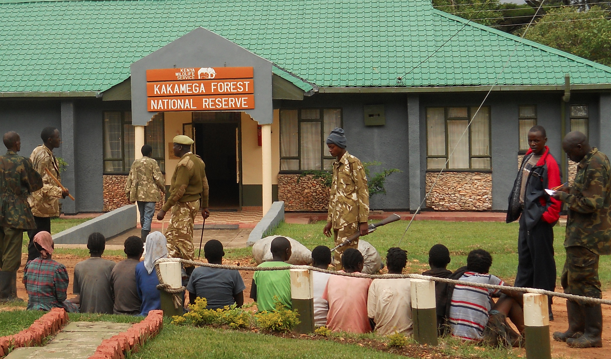 Women await disciplinary action from forestry officials after being caught illegally collecting firewood. Photo courtesy: Rachel Cernansky via TreeHugger


 Posts
Posts


