skip to main |
skip to sidebar
Li Feifan discusses his 40-minute documentary Future Armageddon, screened on Chinese TV via guardian.co.uk
In the news lately has been the extraordinarily bad conditions of Beijing's air, or as some are calling it, "airpocalypse". The city recently went way, way, way off the charts for air pollution and officials are now looking at how to reign in the causes of such incredible pollution.
The Guardian reports, "One week after that chart-busting Saturday, Beijing proposed new measures to combat pollution, including increased fines for excessive vehicle emissions and factory shutdowns on particularly bad days. But experts say the sheer scale and diversity of the pollution's underlying causes means that Beijing residents may not be able to breathe freely for decades."
One resident, Li Feifan, hopes to bring the issues directly to the public view with a new 40-minute documentary showing the flat-out frightening conditions of air within the city. He is hoping a visual presentation of the damage being done will spur residents to change their ways.
A baby is given nebuliser therapy at Beijing Children's Hospital as the capital is hit by record-breaking air pollution. Photograph: Li Wen/Xinhua Press/Corbis via guardian.co.uk
Record-breaking pollution in Beijing and other environmental problems in China are the result of unchecked government power, one of the country's former top environment officials has said.
On 12 January, Beijing's pollution hit a nauseating 755 on a US Environmental Protection Agency-designed 0-500 scale. Below 25 is considered the safe daily level by the World Health Organisation. Stores sold out of anti-pollution face masks, flights were delayed and hospital respiratory wards were overrun with coughing patients. Internet users called it the "airpocalypse".
"I have to admit that governments have done far from enough to rein in the wild pursuit of economic growth, and failed to avoid some of the worst pollution scenarios we, as policymakers, had predicted," Qu Geping, a top environmental protection administrator from 1987 to 1993, told the South China Morning Post.
Qu said that Chinese authorities could have pre-empted the crisis by adhering to a 1983 policy "stipulating that economic and urban construction should synchronise with environmental protection". Yet they haven't, and the country's air, water and soil continue to deteriorate. "Why was the strategy never properly implemented?" he said. "I think it is because there was no supervision of governments. It is because the power is still above the law."
One week after that chart-busting Saturday, Beijing proposed new measures to combat pollution, including increased fines for excessive vehicle emissions and factory shutdowns on particularly bad days. But experts say the sheer scale and diversity of the pollution's underlying causes means that Beijing residents may not be able to breathe freely for decades.
Deborah Seligsohn, an expert on China's environment at the University of California, San Diego, said that there is no silver bullet for the country's air pollution. The underlying causes are dynamic and diverse: power plants, small factories, automobile emissions, rampant construction, farmers burning coal for heat. "One of the things about the air quality in Beijing is that it varies a lot more than it used to," she said.
Beijing's air quality fluctuates with the weather – a strong wind from the north can blow the smog to sea, she said, while south-eastern winds trap the air against a nearby mountain range, drowning the city in a pea-soup haze.
The Guardian writes, "Li Feifan discusses his 40-minute documentary Future Armageddon, screened on Chinese TV this week. It features multiple images of the same city skyline submerged in different levels of smog. Li spent two months filming in the city, including earlier this month when pollution levels were 30 to 45 times above the recommended safety levels."
Air pollution isn't only bad in Beijing. A NASA chart revealing poor air quality across the middle east and Asia.
Another lovely, smoggy day in downtown Anywhere. Photo courtesy: Flickr/CC BY 2.0
Air quality has certainly improved in the U.S. over the last few decades — thanks to the Clean Air Act — but it's still one of the top health concerns around the world. A new report compiled by global health professionals pegs the toll of outdoor air pollution at a staggering 3.2 million premature deaths a year.
Particulate pollution like soot does the most damage, especially in the booming smog-choked cities across Asia. The report, published in the Lancet, finds that outdoor air pollution is the No. 4 health risk there, right behind smoking. Here in the U.S., it's still a major threat too, despite our progress since the sooty seventies. The report asserts that air pollution is the 8th greatest danger to premature birth worldwide.
The NRDC explains how it is that air pollution is so deadly:It is the very finest soot – so small that it lodges deep within the lungs and from there enters the bloodstream – that contributes to most of the public health toll of air pollution including mortality. Diesel soot, which is also a carcinogen, is a major problem because it is concentrated in cities along transportation corridors impacting densely populated areas. It is thought to contribute to half the premature deaths from air pollution in urban centers. For example one in six people in the U.S. live near a diesel pollution hot spot like a rail yard, port terminal or freeway.
Point is, there are still hundreds of millions — if not billions — of people around the world who suffer the ill effects of particulate pollution. It's not just premature deaths, either; it's asthma, respiratory illness, cancer, and so on. Transitioning to cleaner energy sources and cleaner, lower-emissions vehicles will begin alleviate that suffering.
And we should be probably be actively working towards a world where three million people don't have to die early every year because they live too near a truck route or a power plant.
The air in Rome carries traces of marijuana and cocaine. Photo courtesy: Creative Commons Attribution-Share Alike 2.5 Generic (Stefan Bauer)
Rome is known as a heady and stimulating city, but is that because it's a vibrant cultural center where modern life buzzes against a backdrop of thousands of years of history, or because small quantities of cocaine waft through the streets?
Researchers at Italy's Institute of Atmospheric Pollution Research have published the results of a year-long study that monitored psychotropic substances in the air of eight Italian cities: Bologna, Florence, Milan, Naples, Palermo, Rome, Turin and Verona.
The scientists found trace quantities of marijuana and cocaine in the air of all eight cities, with the highest total drug concentrations in Turin and the lowest in Palermo. Other substances monitored included nicotine and caffeine, which were also detected in all of the cities.
But the miniscule concentrations detected — about .26 nanograms of cocaine per meter cubed in Turin, where levels of that drug were highest — are not nearly enough to alter the mind states of Italy's city dwellers. A typical grain of salt weighs about 80,000 nanograms.
The authors of the study say their research gives insight into geographical drug-use trends (while Turin seems to have the most active cocaine trade, the college towns of Florence and Bologna have the most free-floating marijuana particles) and hope the results will be used to inform policy.
Cocaine use in Italy has also left an imprint on other parts of the environment. In 2005, scientists at Milan's Mario Negri Institute for Pharmacological Research checked the Po River in northern Italy for benzoylecgonine, a unique byproduct of cocaine that's expelled in a user's urine. Their study found levels that corresponded to the daily consumption of about 8.8 pounds (4 kilograms) of cocaine in the region.
In America, no analogous survey of psychotropic drugs in urban air has been published. But trace quantities of a range of pharmaceuticals, from epilepsy medication to sex hormones, have been found in American drinking-water sources.
And a 2009 study led by a scientist at the University of Massachusetts Dartmouth found that between 85 and 90 percent of paper money in America is dusted with small quantities of cocaine. Bills can become contaminated during drug deals; while being used directly to imbibe cocaine, as when they're rolled up to snort the drug; or in banks' currency-counting machines, where the bills mingle with already-contaminated money.
 Photo courtesy: foam/CC BY-SA 2.0
Pollution from traditional cookstoves in developing nations, both indoor air pollution and black carbon soot's climate pollution, is equally a serious health issue and a technically easy climate fix.
Simply replace older cookstoves with more efficient new models that function essentially similarly but burn fuel more efficiently, resulting in less smoke and soot, as well as use less fuel, that's the reasoning. The case has been made many times on TreeHugger, and major international aid programs are underway, investing millions of dollars to spread newer, cleaner technology.
But, if a new survey of Bangladeshi women, published in Proceedings of the National Academy of Sciences, is more widely applicable then there's a huge uphill climb ahead for proponents of the cleaner cookstove climate and health fix.
It seems that even though 94% of Bangladeshi women surveyed know that the cooking smoke is a serious health hazard indoors (remember it's overwhelmingly women exposed to the smoke), they'd prefer to stick with traditional stoves and spend money on other aspects of their lives.
If given the option of a new clean cookstove or a cash subsidy, they'd take the cash and spend it on "doctors, schools, electricity, clean water, latrines, seeds for planting, and structures to protect their land from flooding."
Currently 98% of Bangladeshis use traditional cookstoves, fueled by a mix of wood and agricultural waste, and dried animal dung. The smoke from these stoves causes 50,000 premature deaths annually, part of 2 million premature deaths worldwide attributed to indoor air pollution. Outside the home, the black carbon soot from these stoves (as well as from industrial sources and older diesel engines) is a significant component of global warming, as well as increasing the rate of glacier melting as the particles settle on the ice reducing its albedo.
The survey found that even when the clean cookstoves were offered at a 50% subsidy, the rate of adoption only increased 12% for ones which burned fuel more efficiently and 5% for ones with a chimney. At full price the adoption rate was a very meagre 2-5%.
At least in Bangladesh, the draw of electricity, clean water, and a latrine (let alone what we in the wealthy world would consider adequate plumbing) are far bigger draws than either the threat of health problems from indoor air pollution or climate change — both, in the moment, theoretical problems with the effects felt non-immediately.
 Chinese motorists wear masks as they make their way along a busy intersection in Wuhan on June 11. Wuhan was blanketed by thick yellowish cloud Monday, raising fears of pollution among its nine million inhabitants. Witnesses say the haze appeared suddenly in the morning and residents rushed to put on face masks.
Young and old residents of the Chinese metropolis of Wuhan were advised to stay indoors on Monday after a thick haze blanketed the city of nine million people, official media said.
Described by residents as opaque with yellowish and greenish tinges, the fug descended suddenly in the morning, prompting people to rush to put on face masks, witnesses told AFP.
The official Xinhua news agency quoted the environmental protection department of Hubei province saying in a statement: "Children, the elderly and people with heart or respiratory diseases are advised to stay indoors."
Xinhua said straw burning was the cause and denied there had been any industrial accidents in or near Wuhan, after Internet rumours suggested there had been an explosion at a chemical complex northeast of the city.
"I looked out of the window of my office and I could not believe my eyes," said resident Li Yunzhong.
"At first I thought it was going to rain. In 31 years in Wuhan I have never known anything like it. We are very worried because we do not know what it is."
France's consulate-general in the central city advised residents to stay at home, close their windows and limit the use of air-conditioning.
"The source of the thick cloud that has covered the city of Wuhan since this morning is at present unknown," it said on its website.
"Local authorities have promised us the information as soon as possible."
Xinhua described the haze as grey-yellow in colour and said it was seen in seven cities in Hubei province, including Wuhan.
 A thick yellow cloud covers a busy intersection in Wuhan on June 11. Wuhan was blanketed by thick yellowish cloud Monday, raising fears of pollution among its nine million inhabitants.
Air pollution is increasingly acute in major Chinese cities and authorities are frequently accused of underestimating the severity of the problem in urban areas, especially in Beijing.
Air-quality monitoring showed Wuhan's PM10 particulate concentration stood at 0.574 mg per cubic metre at 2:00 pm, more than triple the daily average of 0.150 mg, Xinhua reported.
 A woman wears a mask as she walks along a street in front of a Chinese temple during a hazy day in Wuhan, Hubei province June 11, 2012. China's carbon emissions could be nearly 20 percent higher than previously thought, a new analysis of official Chinese data showed on Sunday, suggesting the pace of global climate change could be even faster than currently predicted. Photo courtesy: REUTERS/Stringer
But it quoted the environmental protection department saying industrial accidents were not responsible and analysis showed an increase in carbon particles from burning organic matter.
"Many farmers choose to burn crops that are left behind in their fields after harvesting," Xinhua said.
But Li was sceptical. "I doubt that," he said. "We don't practise large-scale shifting agriculture in our region."
Another resident told AFP she was leaving the city because of the cloud.
Wuhan is the capital of Hubei province and an industrial centre where many foreign firms have set up factories, including the French automotive group PSA Peugeot Citroën.
Alstom also manufactures boilers for coal-fired power plants there.
China's environment suffers from industrial pollution, increasing traffic and lax protection measures.
Official air-quality statistics are sometimes at odds with non-government measurements, and are often viewed with distrust.
 A haze engulfing buildings in Wuhan, China. Air pollution is believed to be the main cause of global dimming. Photo courtesy: STR/AFP/Getty Images
Measurements from the 1960s to the early 1990s, backed up by a wide range of data and a number of independent studies, showed there were substantial declines in the amount of the sun's energy reaching the Earth's surface. This reduction is known as "global dimming".
The observed "dimming" has strong regional differences across the globe. While the southern hemisphere saw modest dimming in the period 1961–90 (which has continued to date), the northern hemisphere saw much more significant declines (reductions of 4–8%). Since then some parts of the world, such as Europe and North America, have seen partial recovery (known as "brightening"), while other regions (most notably China and India) have seen further although regionally mixed declines.
Global dimming is not thought to be due to changes in the sun's luminosity, as these have been too small to explain the magnitude of dimming observed. Instead, air pollution from human activity is thought to be the major contributor. Aerosols which form from pollution can directly reflect and absorb radiation before it reaches the planet's surface and make clouds brighter and longer lasting, meaning they reflect more sunlight.
While we cannot rule out the possibility that natural variations in the Earth's climate (via naturally occurring cloud variations) have contributed to global dimming, the effects are so closely correlated to trends in atmospheric pollution that there is strong evidence to say human activity is a major player. For example, European and North American clean air legislation in the 1990s corresponded to brightening in these regions. By contrast, China and India have seen further dimming, matching pollution increases from rapid industrialisation.
Global dimming is thought to have had a number of substantial impacts. For example, there is evidence to suggest it has masked part of the historical warming caused by greenhouse gases. Indeed, areas that have undergone brightening have seen rapid warming.
Future global dimming changes can be expected to be closely tied to emissions of atmospheric pollution. Another factor which has not played much of a role historically but which may become more significant in the future is the impact of greenhouse gas warming on global dimming. Warming of higher levels of the atmosphere leads to increased atmospheric water vapour, which in turn absorbs some of the sun's energy before it reaches the surface. If future global warming proves to be substantial, widespread dimming by water vapour could be a consequence – though the cooling effect of this would be unlikely to reduce the overall warming trend significantly.
 No idea where this is located; but, I just couldn't pass it up. Photo courtesy: wallpaperseek.com
Urban air pollution is set to become the biggest environmental cause of premature death in the coming decades, overtaking even such mass killers as poor sanitation and a lack of clean drinking water, according to a new report.
Both developed and developing countries will be hit, and by 2050, there could be 3.6 million premature deaths a year from exposure to particulate matter, most of them in China and India. But rich countries will suffer worse effects from exposure to ground-level ozone, because of their ageing populations – older people are more susceptible.
 Even the Big Apple (New York, NY) is barely visible under a cloak of smog. Photo courtesy: Wikipedia
The warning comes in a new report from the Organisation for Economic Cooperation and Development (OECD), which is a study of the global environmental outlook until 2050. The report found four key areas that are of most concern – climate change, loss of biodiversity, water and the health impacts of pollution.
If current policies are allowed to carry on, the world will far exceed the levels of greenhouse gas emissions that scientists say are safe, the report found. "I call it the surrender scenario – where we would be if governments do nothing more than what they have pledged already?" said Simon Upton, environment director at the OECD. "But it could be even worse than that, we've found."
 The view of smog covering central London, UK from Hampstead Heath in April 2011. Photo courtesy: Matt Dunham/AP via guardian.co.uk
The report said that global greenhouse gas emissions could increase by as much as half, as energy demand rises strongly, if countries fail to use cleaner forms of energy. Water demand is also likely to rise by more than half, and by 2050 as much as 40% of the global population is likely to be living in areas under severe water stress. Groundwater depletion would become the biggest threat to agriculture and to urban water supplies, while pollution from sewage and waste water – including chemicals used in cleaning – will put further strain on supplies.
However, the OECD study also said that there are some actions that governments can take quickly to tackle some of the key problems. For instance, many governments treat diesel fuel for vehicles differently than petrol for tax purposes, with tax breaks that encourage the take-up of diesel. But although diesel vehicle fuel produces lower greenhouse gas emissions than petrol, it is far worse for spewing out small particulate matter, which is bad for urban pollution. "In environmental terms, there is no reason to give diesel tax breaks over petrol," said Upton.
 Beijing, China, which is one of the countries likely to be worst hit by pollution-triggered deaths in coming decades. Photo courtesy: David Gray/Reuters via guardian.co.uk
Governments could also remove other environmentally harmful subsidies, such as fossil fuel subsidies and subsidies for water that encourage irresponsible use of the resource. Biofuels are another potential danger area, because although they can emit less carbon than conventional fossil fuels, they also contribute to reducing biodiversity and put further strains on water use, so governments should consider carefully whether to go down the biofuels road, Upton warned.
Upton said that if governments took action now, and developed long-term views of these environmental problems, it would give them a much greater chance of avoiding the worst outcomes. "The key thing is that these four biggest problems are interconnected – biodiversity is affected by climate change and land use, water is linked to health problems, for instance. You can't solve any one of these in isolation. So to be effective, governments have to focus on all of these four and look very closely at the connections between them," he said.
 River winding through a canyon. Photo courtesy: Alan Vernon
A government report released recently has found that selenium contamination from a phosphate mine in Idaho is connected to fish deformities in the area, including two-headed trout. And, the problem will worsen if water quality standards are relaxed as the company is requesting.
From Reuters/Scientific American:The findings come as Smoky Canyon Mine is asking the Idaho Department of Environmental Quality to relax restrictions on the amount of selenium the mine is allowed to drain into tributaries of the Snake River. The Smoky Canyon Mine is run by the J.R. Simplot Company near the Wyoming border.
Simplot is one of the nation's largest privately-held companies with annual sales of about $4.5 billion. Obviously, the company wields considerable clout in its home state.
Environmentalists' concerns about selenium, an element released as a byproduct of the mining operation, prompted a U.S. Senate panel to ask contaminant specialists with the U.S. Fish and Wildlife Service to evaluate whether Simplot's request would harm wild trout and other species.
 Two-headed fish fry. Photo courtesy: Alternet
Yet Simplot argues the effects seen in fish are just one piece of a complex puzzle, and stands behind its proposal to relax the water quality standards. AP explains what's at stake in the decision both for Simplot and for opponents of the proposed new standards:For Simplot, working with rules allowing for higher levels of selenium than currently allowed could save time and money devoted to cleanup and future monitoring.
For environmentalists, a change in standard could open the door to legal challenges or other mining companies seeking the same change in a region already impaired by decades of mining. And at least one federal agency has already weighed in, raising concerns about Simplot's research and claims the company is underestimating the potential impacts any change could have on fish.
Simplot doesn't deny that the selenium contamination has some effects—the company hired toxicologists to test selenium exposure and found that many developing brown trout died and others were hatched with two heads. What the company has done, the government review found, is underestimate these effects. More again from Reuters:Fish and Wildlife Service scientists found Simplot underestimated rates of deformity and mortality in the wild linked to selenium exposure. The agency said Simplot had failed to account for deformities of trout that had died, skewing the rate of abnormalities in the company's favor.
The company's findings "systematically biased low and environmentally unrealistic quantification of larval deformity rates," according to the government report, which was reviewed by three independent scientists.
The story explains that other wildlife, such as mallard ducks, are also affected but Simplot did not analyze those risks. The phosphate mined is used to produce fertilizer and livestock feed supplements.
This is not the first time that selenium contamination has harmed wildlife; California's Kesterson National Wildlife Refuge saw major deformities in birds and a massive fish die-off in the 1980s, but that led to the closure of the refuge.
AP quotes Marv Hoyt, Idaho director of the Greater Yellowstone Coalition: "Any change in the standard would do nothing more than get Simplot off the hook to clean up as much as they should... How does anything being proposed by Simplot help improve the environment or the population of fish in those streams?"
 Photo courtesy: Simone Ramella / cc
While the sight of a hazy, smog filled cloud looming over the cityscape is certainly enough to break the heart of any would-be outdoorsman, it turns out that breathing in that pollution just might do so -- quite literally. According to a recently published study from the British Medical Journal, the inhalation of vehicle emissions can actually increase the likelihood of a heart attack, even up to six hours after exposure.
Air pollution has previously been linked to a myriad of health complications -- including, but not limited to, a drop in fertility, loss of worker productivity, and even depression. Previous research, and common sense, had indicated that prolonged exposure to air pollution was damaging to the human cardiovascular system, but this may be the first instance in which breathing in airborne particulate matter from cars within a short period of time raised the risk of a potentially deadly heart attack.
To find a correlation between this serious medical emergency and air pollution, researchers from London's School of Hygiene and Tropical Medicine analyzed nearly 80 thousand heart attack victims and compared the time and location of the attack with records of ambient air pollution maintained by the U.K. National Air Quality Archive.
The study indicates that a small but measurable increase in heart attacks was found to associated with air pollution caused by vehicle traffic -- and the more fossil fuel burning cars are contributing to it, the increased probability only rises. From Time.com:After controlling for environmental factors like air temperature, humidity and viral infection rates, along with social factors like holidays and day of the week, the researchers found that exposure to high levels of certain components of air pollution -- pollutant particles and nitrogen dioxide, which are a byproduct of car traffic -- was associated with a greater risk of heart attack. The heavier the traffic pollution, the higher the risk of heart attack.
The researchers looked at heart attack risk for 72 hours after exposure to pollution, but found that the risk remained elevated for only six hours.
According The Guardian, ever year exposure to air pollution contributes to the premature deaths of some 29,000 in the UK alone -- which suggests that the global death toll from vehicle emissions is most likely mind-boggling. And, as more research into the harmfull impact that breathing in particulate matter spewed out by cars is having on our bodies, we're bound to attribute more deaths to a lack of clean air.
 Residents gather to begin their demonstration on Aug. 27. (Weibo.com). Photo courtesy: TheEpochTimes
Residents living near a petrochemical plant in Dalian demonstrated seeking to ensure their safety after the plant spilled particulates 2 days prior and discharged clouds of thick smoke the day before. The marchers, who cried, “Keep Us Alive,” were dispersed by police and the company did not respond to their complaints.
The plant is owned by Petrochina Dalian and this incident is the second protest against chemical pollution this month in the area.
The residents demonstrated in the morning near the petroleum market in Shanzhong Street. Around noon, the authorities dispatched hundreds of policemen and special units to block the street with their police cars so that the demonstration would be interrupted.
Mrs. Wang, a laid-off worker from Plant 523, described the situation: “On Thursday and Friday some residents protested with a sit-in at the Number 2 & 3 in the petrochemical factory and asked for a resolution of the workers’ migration status problems and an accounting of the spill’s toxicity. However, the factory treated the protestors with indifference; nobody received them nor were any reasons for the spill disclosed to them. Apparently, the factory did not take the civilians’ lives seriously.”
 The white powder pictured in the lower two-thirds of the image caused itchy skin. (Weibo.com). Photo courtesy: TheEpochTimes
Mrs. Wang said that the powder spilled seemed to be poisonous. Afterwards, her skin felt very uncomfortable and itchy all the time.
Another resident Li Na (a pseudonym) said: “I live in a bungalow. The yard and the street were all full of snow-like particulates, which were stuck to the ground and could not be swept away with a broom. Though the weather is hot, I dare not open the window, so it’s very stuffy and barely endurable.”
Phone calls to Petrochina Dalian went unanswered, although the company has many phone lines. Later the local Environmental Protection Agency was contacted and asked whether the substance spilled was toxic or not. But the on-duty official claimed that he had heard nothing about the incident and was reluctant to talk more.
This is the second recent event in which Dalian residents have protested in public to express their strong dissatisfaction with lax environmental standards. On Aug. 14, they sought to draw attention to the storage and spillage risk of PX (paraxylene, a toxic, hazardous material), kept near the coastline by the Dalian Fujia Petrochemical Co. Ltd
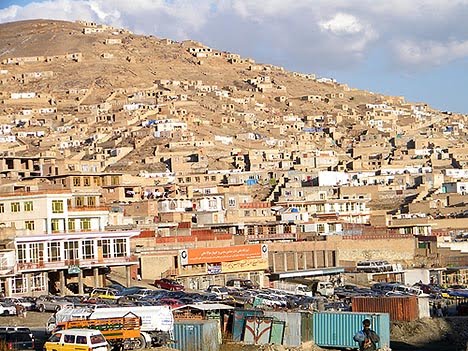
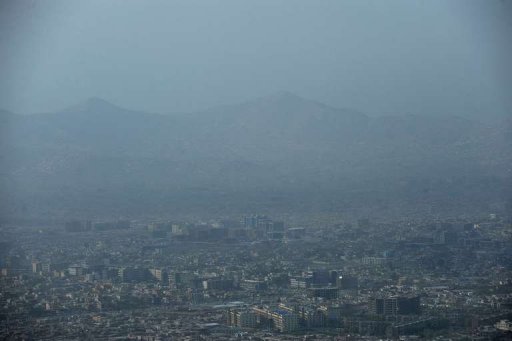
 A general view of Kabul city horizon shows the blanket of haze from air pollution. War may kill thousands of civilians a year in Afghanistan, but choking air pollution in the capital Kabul from old cars, poor quality fuel and people burning trash is even more fatal, experts say. Photo courtesy: Physorg.com
Signs of the silent killer -- pollutants emitted by old cars, poor quality fuel and people burning trash -- are everywhere on the city's chaotic streets.
Men walking or cycling usually cover their mouths with masks or scarves to keep out the dust. Women clasp blue burkhas to their faces.
"It's not possible to stay healthy without a mask," said Ahmad Wali, a pharmacist who wears his every day, even when working in his store.
"People are stuck with a very big problem. It's difficult to reduce pollution quickly. We have to breathe this air."
The city's primitive and over-stretched hospitals are forced to treat ever increasing numbers of people with respiratory problems.
"I've been sick for three years," said Malalai, an Afghan mother of nine being treated at the Jamhuriat hospital, one of the city's biggest.
"When I talk, I get breathless after two or three minutes. I have chest pains when I try to breathe. I can't walk or stand for a long time and I have no energy."
 Kabul, as seen on a smog-free day. Photo courtesy: LaurasEye's/Creative Commons via TreeHugger
The figures are stark. Around 3,000 people per year die of air pollution in Kabul, the National Environment Protection Agency said last year.
By comparison, the United Nations says that 2,777 civilians were killed in the war across Afghanistan in 2010.
There are several main causes of air pollution, but underpinning them all is Kabul's rapid expansion as people fled to the capital in search of relative stability amid fighting in many rural areas.
The city was designed for about one million people but is now home to around five million, a figure which the Kabul municipality says has doubled in six years.
Many of the new arrivals live in illegally built slum homes and Kabul's infrastructure struggles to cope.
Kabul is now home to around five million people.
 Another view of the usual smoggy haze that envelopes the city of Kabul. Breathing in a constant stream of this toxic air has sickened nearly 1/2 million people in the city. Photo courtesy: Physorg.com
The city's roads are usually jammed with old and poorly maintained cars imported illegally from countries like Canada, Germany and the United States, often spewing out fumes which are the by-product of poor quality fuel.
Many of the roads are unpaved, meaning that when the cars can move, they throw up dust which adds to the poor air quality.
Households often rely on diesel generators for electricity, while businesses like brick factories and public baths also use them.
During bitterly cold winters, local people often burn anything they can get hold of, including old tyres and plastic, as they struggle to keep warm.
The health ministry estimates that the number of Afghans suffering from respiratory problems has trebled over six years to around 480,000. That's nearly 1/2 million people suffering from respiratory problems in Kabul alone. This does not include the rest of the country.
Officials admit they are finding it hard to get on top of the problem given the magnitude of issues facing Afghanistan after three decades of war and nearly 10 years after the 2001 US-led invasion brought down the Taliban.
Last year, they made Thursdays official holidays in Kabul -- in addition to Fridays -- in a bid to reduce air pollution. A resolution has also been passed to ban businessmen importing old cars.
The mayor's office insists the move has had a "very good effect" in stopping pollution getting worse but could not provide any figures.
"Government vehicles are not allowed to (be used) on holidays and that prevents all the vehicles from moving and is a big help for decreasing the pollution," said spokesman Mohammad Ishaq Samadi.
But Ghulam Mohammad Malikyar, a senior advisor to the National Environment Protection Agency, said: "We're still struggling to put environmental issues and the environment as a priority in national and international strategies.
"The country was at war for the past 30 years and there was very little control over the environment, there was no environmental protection at all."
Doctors warn that unless action is taken, Kabul faces serious problems.
Erfanullah Shifa, a doctor at the Jamhuriat hospital, said up to 20 people a day were registering with respiratory problems.
"If air pollution keeps rising the way it is now, Afghan people will face a health disaster in the near future," Shifa said.
Via Physorg.com and TreeHugger
 Photo courtesy: Care2
Most people are, by nature, cautious about the things they will let in their home. However, most people also believe that if the government has approved it; and, it is available to the general public, then it must be safe. Couple that with the pressure exerted on consumers every day via TV, internet and radio commercials that the health and safety of the family lies in the products used. One of the most dangerous untruths around is that absolutely every surface in the house should be cleaned daily with this miracle spray that will protect the family from dirt, grime, bacteria - implying that parents that don't use these products are exposing their children to horrendous health implications.
Nothing is further from the truth!
Air fresheners, disinfectants, and cleaners found under your sink are more dangerous than you think. For example, mix bleach with ammonia and you’ve got a toxic fume cloud used by the military in WWI. And they weren’t cleaning kitchens.
Here is a list of the ten products you should ban from your home – forever – along with suggested alternatives.
1. Non-Stick Cookware
When non-stick pans were first introduced into American households in the 1960s, they were thought to be a godsend. Gone were the days of soaking pans for hours and scouring pots with steel wool. In the forty years since then, however, we’ve learned that the ease of cleaning comes at a steep price: the coating that makes Teflon pans non-stick is polytetrafluoroethylene, or PTFE for short. When PTFE heats up, it releases toxic gasses that have been linked to cancer, organ failure, reproductive damage, and other harmful health effects.
Teflon pans that burn give off gasses that have killed pet birds in other parts of the house; so, I have to wonder what they are doing to me.
The problems with PTFE-coated pans seem to occur at high temperatures, so if you must use Teflon, cook foods on medium heat or less. Avoiding non-stick pans altogether is the safest option. If you’re able to do so, try anodized aluminum, stainless steel, or cast iron pans with a little cooking oil. SustainLane reviewers like LeCreuset cast iron pans and more cost-effective ones like Lodge Logic. Using a lower setting on the stove will reduce the chances that your food will burn, which is how it usually gets stuck to pans the first place. If you’re worried about the extra calories cooking oil adds, try baking or steaming your food. More tips and safer alternatives here.
2. Plastic Bottles
By now you’ve heard of dangers of BPA in those ubiquitous neon water bottles. BPA mimics the effects of hormones that harm your endocrine system. While the company at the heart of the controversy has switched to BPA-free plastic, those aren’t the only toxic bottles. Single-use plastic bottles are even worse for leaching chemicals, especially when you add the heat of the sun (think about bottles left in your trunk) or the microwave. Aside from the fact that bottled water sold across state lines is not as regulated as tap water, the bottles themselves are spawning grounds for bacteria and are a source of needless waste. Each year, more than one million barrels of oil are used to manufacture the more than 25 billion single-use plastic water bottles sold in the U.S. Choose a reusable, stainless steel or glass bottle instead.
3. Conventional Cleaning Supplies
These routinely make the top ten lists of worst household offenders. They contain toxic chemicals that negatively affect every system in your body. All purpose cleaners often contain ammonia, a strong irritant that has been linked to liver and kidney damage. Bleach is a powerful oxidizer, which can burn the skin and eyes. Another danger lies in oven cleaners, which can cause chemical burns and emit toxic fumes that harm the respiratory system. The American Association of Poison Control Centers reports that more than 120,000 children under the age of five were involved in incidents involving household cleaners in 2006, the most recent year for which data is available.
To protect you and your family from the hazards conventional cleaners pose, choose non-toxic, or natural cleaners. SustainLane reviewers have particularly enjoyed Method and Seventh Generation, which are commonly found on supermarket shelves. Bon Ami is a safe alternative to Comet and Ajax. If you have the time and want to go the extra mile, you can even mix your own using common household items like vinegar and baking soda. Make a non-toxic cleaning kit.
4. Chemical Insecticides and Herbicides
Since the purpose of these products is to kill pests, you can bet that many of them have ingredients in them that are also harmful to humans. For example, the active ingredient in Round-Up–a weed-killer popular with gardeners–is known to cause kidney damage and reproductive harm in mice. And cypermethrin, one of the active ingredients in the popular ant and roach-killer Raid, is a known eye, skin and respiratory irritant and has negative effects on the central nervous system.
There are several companies that sell natural and organic weed- and pest-control products. Buhach makes a natural insecticide from ground chrysanthemum flowers that controls ants, flies, fleas, lice, gnats, mosquitoes, spiders, and deer ticks, among other pests. Boric acid is an effective, natural solution for cockroaches as well; sprinkle it around baseboards, cracks and other places likely to harbor roaches. For weeds, check out E.B. Stone Weed-N-Grass or try spot-spraying with household vinegar. Learn more about getting rid pf pests naturally.
5. Antibacterial Products
The widespread use of antibacterials has been shown to contribute to new strains of antibiotic-resistant “super-bugs.” The Center for Disease Control says that antibacterials may also interfere with immune system development in children. Triclosan – the most common antibacterial additive found in more than 100 household products ranging from soaps and toothpaste to children’s toys and even undergarments–accumulates in the body. In a study conducted by the Environmental Working Group, 97% of breast feeding mothers had triclosan in their milk, and 75% had trace amounts of the chemical in their urine.
Make it your goal to be to be clean, not germ-free. People who are exposed to household germs typically develop strong immune systems and are healthier overall. Avoid buying antibacterial products or soaps containing triclosan. Soap and water is really all you need to clean most things. There are plenty of eco-friendly hand washes and other cleansers that are safe for you and easy on the planet.
6. Chemical Fertilizers
These are notorious for causing damage to our water supply and are a known major contributor to algal blooms. Whenever it rains or a lawn is watered, the runoff goes straight into storm-drains, and untreated water is dumped into rivers, streams, and the ocean. This causes an imbalance in delicate water ecosystems, killing fish and degrading water quality.
If you have a lawn, choose organic fertilizers rather than chemical ones.
As another alternative to harsh chemicals, consider starting a compost pile to create nutrient-rich soil for your flower beds and vegetable gardens. You’ll be creating your own inexpensive fertilizer just by letting food scraps and yard trimmings sit. An added benefit: it’ll also help divert waste from landfills.
7. More Bulb for Your Buck
A Compact Fluorescent (CFL) bulb uses just a fraction of the energy regular light bulb uses. When your current bulbs burn out, swap them with CFLs, and start calculating your savings. General Electric has an online calculator that shows you just how much money you can save by making the switch.
One caveat of the low-energy bulb is that it contains mercury. Even so, CFLs are still your best bet, according to EPA Energy Star program director Wendy Reed. Coal-fired plants are the biggest emitters of mercury. Using CFL bulbs means you draw less power from the grid, which means less coal is burned for electricity. Because of the mercury, take precautions when disposing of these CFL bulbs. Rather than throwing them in your household trash or curbside recycling bin, take them to a hazardous waste collection or other special facility.
8. Air fresheners
Just like cleaning supplies, these are incredibly toxic and can aggravate respiratory problems like asthma. Even those labeled “pure” and “natural” have been found to contain phthalates, chemicals that cause hormonal abnormalities, reproductive problems and birth defects. Try simmering cinnamon and cloves to give your home an “I’ve-spent-the-whole-day-baking” scent, and leave a few windows open to let in fresh air. You might also boil a pot of water on the stove with a few drops of your favorite essential oil, or use an essential oil burner.
9. Flame Retardants
A common flame retardant that was used in mattresses–polybrominated diphenyl ethers (PBDE)–is known to accumulate in blood, breast milk and fatty tissues. This chemical is linked to liver, thyroid, and neuro-developmental toxicity. According to the Environmental Working Group, new foam items often do not contain PBDEs, but foam items purchased before 2005 (like mattresses, mattress pads, couches, easy chairs, pillows, carpet padding), are likely to contain them. Household furniture often contains flame retardants and stain repellents that use PBDE’s as well as formaldehyde and PFOA (the same chemical used in non-stick cookware).
If you are in the market for a new mattress or sofa, ask manufacturers what type of flame retardants they use. Look for products that don’t use brominated fire retardants. Organic Abode sells natural and organic furniture. If you’re looking to keep your existing mattress, but make it safer, use a cover made of organic wool to reduce PBDE exposure. You can find organic furniture and interior decor here.
10. Plastic Shopping Bags
Remember: Like diamonds, plastics are forever. Ever heard of the Great Pacific Garbage Patch? It’s a giant mass of plastic twice the size of Texas that’s floating 1,000 miles off the coast of California. In the United States, only two percent of plastic bags are recycled, which means that the remaining 98 percent is dumped into landfills or blown out to sea. According to Californians Against Waste, the City of San Francisco, which recently banned plastic shopping bags, spends 8.5 million dollars annually on plastic bag litter.
The good news is, we can easily decrease our plastic bags use. Bring in your own reusable cloth bags when you go shopping. If you have kids, ask them to remind you to bring them. Or keep them in a place by the door where you’re most likely to remember them on your way out.
Via Care2 and Divine Caroline
 March 16, 2006: Workers unload electronic waste from trucks as seen from a hidden position inside of a vehicle in Guiyu, China.The town looks like one of those extended garbage heaps you see on World Vision ads on television. The ones where the little children go every day to scavenge anything they can (instead of being able to go to school) in order to put a few grains of rice in the stomachs of their brothers and sisters. Sometimes they are responsible for the stomachs of their parents as well.
The smoke from the always-smoldering dump sites pollute the air they breathe and exact a heavy toll on their frail, undernourished bodies. The lucky ones have rags they can tie to their feet to protect them from the heat and the dangers in the dump.
In Guiyu, China things are similar. However, in this case, the entire village is involved the "recycling" of electronics. Those who settle and work in Guiyu are the truly destitute. Persons who are too desperate for money or too ill-formed to let the health risks stop them from working.The air is heavy, acrid and laden with carcinogenic particles from the squat gas burners that sit outside homes and the plastic from the wires the workers melt over these burners in order to recover the copper inside. Computer motherboards are cooked for their gold content adding their toxic ingredients to the witches’ brew. Plastic casings are shredded; open fires, acid baths and broilers are used to recover the gold, silver, copper and other valuable metals while the thickener for this concoction is provided by migrant workers in filthy clothes who smash picture tubes by hand (no gloves – too expensive) to recover glass and electronic parts. They can add as much as 6.5 pounds of lead dust per person per day. Say good-bye to pink, healthy lungs, say hello to life in a computer graveyard.
As the picture shows, the trucks just show up and quickly unload their dead electronics right onto the street and then drive away. The workers come, pick through the stuff that has been dumped and take away the pieces they either “specialize” in or think will yield the most copper, gold and other saleable materials. It is estimated that approximately 70 percent of the 20-50 million tons of electronic waste produced globally each year is dumped in China. India and the poorer African nations are the lucky recipients of the rest.
"I've seen a lot of dirty operations in Third World countries; but, what was shocking was seeing all this post-consumer waste," said Jim Puckett of the Seattle-based Basel Action Network (after a visit to Guiyu). "This is all stuff from you and me."
One year ago, the environmental group Greenpeace sampled dust, soil, river sediment and groundwater in Guiyu and found escalating levels of toxic heavy metals and organic contaminants. They found “over 10 poisonous metals, such as lead, mercury and cadmium” reported Lai Yun, a campaigner for the Greenpeace.
“When the workers shatter the circuit boards into powder, they rinse it away with water,” said Wu, the environmental activist on the trip. "And the water goes into the rivers. They also use acid baths to dissolve metals on the boards. The acid is also released into the rivers," Wu continued.
Consequently, the ground water is so polluted that drinking water has to be trucked in from a town 18 miles away, Greenpeace reported. One river sample in the area had 190 times the pollution levels allowed under World Health Organization guidelines.
Water for the town is trucked in; but, that seems to be the only concession being made in showing concern for the workers’ health. Fish destined for the workers’ dinner plates are raised in local contaminated ponds which can’t help but contaminate the fish raised in them. Would you like your heavy metals in solid, liquid or gaseous form today? Piles of ash and plastic waste sit heaped haphazardly beside rice paddies and dikes that hold back the Lianjiang River. Accidents waiting to happen.
Chemicals, including mercury, fluorine, barium, chromium, and cobalt, that either leach from the waste or are used in processing, are blamed for skin rashes and respiratory problems.
Contamination can take decades to dissipate, experts say, and long-term health effects can include kidney and nervous system damage, weakening of the immune system and cancer.
"Of course, recycling is more environmentally sound," said Wu Song, a former local university student who has studied the area. "But I wouldn't really call what's happening here recycling."
Isn’t there some kind of legislation against this? Isn’t there some kind of law to help people like this? There is…and there isn’t. The reason this still continues next blog.




 Posts
Posts


